A fire pit and an outdoor fireplace tend to end the same way, with everyone staying outside a lot longer than they planned. How you get to that point is where they split. One is open, low, and social. The other is tall, framed, and more of a built structure. Both work beautifully in a Wellington backyard, but they solve slightly different problems, and the right pick depends on how you live outdoors and what you want to spend.
If you’ve been going back and forth on it, here’s how the decision usually shakes out once you get past the pretty photos.
Start With How You’ll Actually Use It
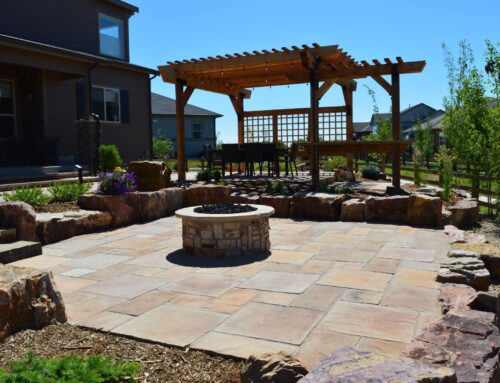
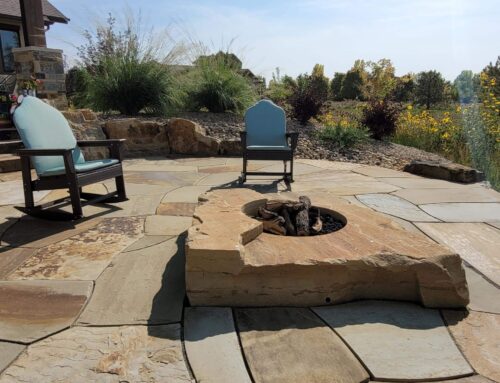
Before cost or materials, think about the nights you’re picturing. A fire pit is built for gathering in a circle. People pull chairs all the way around, kids roast marshmallows, and the conversation moves in every direction. It suits bigger, casual groups and that loose, everyone’s-welcome feeling.
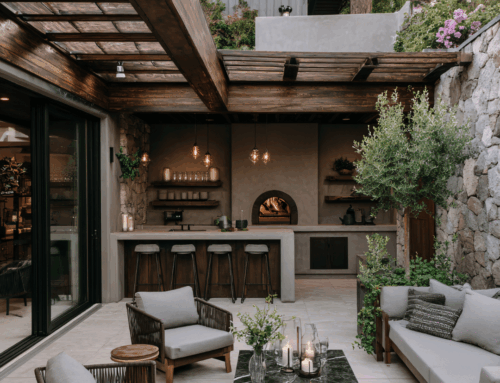
An outdoor fireplace works differently. It faces one direction, so seating lines up in front of it like a living room does around a hearth. That makes it feel a little more intimate and a little more finished. It also anchors a space. Set one against the edge of a patio and it instantly gives that corner a purpose.
A few honest questions usually settle it:
- Do you host big groups, or is it mostly your household and a couple of guests?
- Do you want the fire to be the centerpiece, or a backdrop to a defined seating area?
- Are you drawn to a relaxed, open feel or something that reads as an outdoor room?
Neither answer is better. They just point in different directions.
What Each One Really Costs
This is where the two options separate the most. A fire pit is almost always the more affordable build. It’s lower, uses less material, and takes less structural work to do right. You can keep it simple or dress it up with quality stone, and it still lands well under what a fireplace runs.
An outdoor fireplace is a bigger investment, and the reason is straightforward. You’re building something tall that has to stand up to weather and wind for years, which means a real footing, a proper firebox, a chimney or flue, and a lot more masonry. That labor and material add up. The payoff is a permanent feature that looks like part of the house rather than an add-on.
I’d steer you away from judging either one by the sticker price alone. A cheap fireplace kit that cracks after a couple of Colorado winters costs more in the long run than a well-built fire pit that lasts. Build quality and a solid base matter more than shaving the initial number.
Heat, and How Far It Actually Reaches
Warmth is a big part of why people build either one, and the two behave differently once the temperature drops.
A fire pit throws heat outward in all directions. Sit close and you’re warm on the side facing the flame. It’s great for a crowd because everyone gets a share, though on a cold, breezy night the open design lets a lot of that heat wander off.
An outdoor fireplace pushes heat forward, toward the seating in front of it. It concentrates the warmth instead of spreading it thin, and the tall back and sides block wind, which counts for a lot on the Front Range. If extending your season into the chilly shoulder months is the goal, a fireplace usually holds the heat where you want it better than an open pit does.
How Much Space Each One Needs
Your yard often makes part of this decision for you. A fire pit has a small footprint, but it needs open room around it because seating wraps the full circle. You want a clear, safe distance between the flame and anything that can catch, plus space for chairs to breathe. In a compact Wellington lot, that circle of clearance can eat up more usable yard than people expect.
An outdoor fireplace takes up more physical space, yet it’s often smarter in a tight or oddly shaped yard. Because you only seat one side of it, you can tuck it against a fence line or the edge of a patio and reclaim the rest of the space. It also doubles as a bit of a privacy screen and a windbreak, which a low pit can’t do.
Wood, Gas, and Colorado Weather
Both a fire pit and an outdoor fireplace can burn wood or run on gas, and that choice shapes the day-to-day experience as much as the structure does. Wood brings the crackle, the smell, and the ritual of building a fire. Gas brings a flame at the turn of a knob and no ash to clean up, which is hard to beat on a weeknight when you just want twenty quiet minutes outside.
Our climate is worth factoring in too. Northern Colorado gets dry stretches where fire restrictions and burn bans come and go, and those tend to hit wood-burning features harder than gas. Wind is the other one. An open fire pit on an exposed Wellington lot can be tough to enjoy on a gusty evening, while a fireplace or a pit with some shelter around it holds up better. And whatever you build, a proper base and quality materials matter here, because our freeze-thaw swings are hard on anything that isn’t installed to handle them.
There’s no wrong answer between wood and gas. It comes down to whether you want the experience of tending a fire or the convenience of flipping it on.
Frequently Asked Questions
Ready to Add Fire to Your Backyard? Let’s Talk It Through With Grounded Landscape Designs
The best way to decide between a fire pit and an outdoor fireplace is to look at your actual yard, your budget, and how you want to spend your evenings out there. That’s the part we enjoy. At Grounded Landscape Designs, we design and build both as part of complete outdoor living spaces across Wellington and Northern Colorado, so the fire feature fits the rest of your yard instead of feeling bolted on. Reach out when you’re ready to start planning, and we’ll help you build something you’ll use long after the first frost.